

 +1 619-743-9389
CONTACT US
- +1 619-743-9389
- 11031 Via Brescia, San Diego, CA 92129
- resetappliance@gmail.com
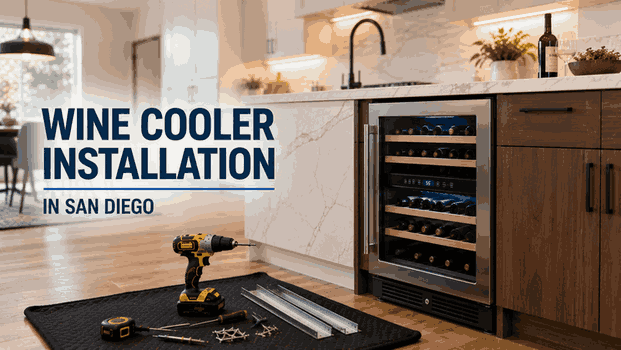
Wine Cooler Installation in San Diego
A wine cooler must fit the intended space, receive adequate ventilation, stand level, and maintain stable temperatures without excessive vibration. Proper installation also requires correct electrical access, sufficient door clearance, secure shelving, and enough room around the cabinet for the cooling system to release heat.
Reset Appliance Repair provides professional wine cooler installation in San Diego for built-in, under-counter, freestanding, column, single-zone, and dual-zone models. We install residential wine refrigerators in kitchens, home bars, dining areas, entertainment rooms, and custom cabinetry.
What Is Included in Wine Cooler Installation?
Professional installation may include inspecting the installation area, measuring the opening, checking the electrical outlet, positioning and leveling the appliance, adjusting the door, installing handles and shelves, confirming ventilation, and testing the controls.
The exact process depends on the wine cooler design. Manufacturer instructions should be reviewed for cabinet dimensions, ventilation clearances, ambient temperature limits, electrical requirements, door-opening space, and startup procedures.
Wine Cooler Types and Their Installation Requirements
Built-In Wine Coolers
Built-in wine coolers are designed to fit inside cabinetry. Many use front ventilation, allowing warm air to leave through a grille at the bottom of the appliance. The grille must remain open and should not be covered by a toe kick, trim panel, or flooring.
Under-Counter Wine Coolers
Under-counter wine coolers require accurate measurements for width, height, and depth. The door, handle, hinges, and shelves must clear nearby cabinets, walls, and islands.
Freestanding Wine Refrigerators
Freestanding wine refrigerators usually release heat through the back or sides. They should not be enclosed inside a cabinet unless the manufacturer specifically approves that arrangement. Restricted airflow can increase operating time and reduce temperature stability.
Column Wine Refrigerators
Column wine refrigerators are tall built-in units that may require anti-tip hardware, cabinet anchors, or approved mounting brackets. Their height, weight, and door design make structural support especially important.
Single-Zone and Dual-Zone Wine Cooler Setup
Single-Zone Wine Coolers
A single-zone wine cooler maintains one temperature throughout the cabinet. It may be suitable when the homeowner primarily stores one type of wine or prefers a consistent serving temperature.
Dual-Zone Wine Coolers
Dual-zone models have separate compartments or control areas. One zone may be set for white wine while the other is used for red wine. The zones should be configured according to the homeowner’s storage preferences and the manufacturer’s operating range.
Some models include multiple fans, temperature sensors, humidity controls, or independent evaporator systems. Shelves and bottles must not block internal vents because restricted circulation can create uneven temperatures.
Measuring the Cabinet Opening and Door Clearance
The installation opening should be measured at the front, center, and rear. Cabinets, floors, and countertops are not always perfectly square.
Important measurements include width, height, depth, ventilation space, hinge clearance, handle projection, and the distance required to pull out each shelf. A wine cooler may fit inside the opening while still lacking enough room for the door or shelves to operate correctly.
In San Diego homes, wine coolers may be installed in remodeled kitchens, compact condominiums, custom wet bars, kitchen islands, or entertainment areas. Inspecting the location before final positioning helps prevent cabinet interference, blocked ventilation, and visible gaps around the appliance.
Does a Wine Cooler Need Ventilation?
Every wine cooler produces heat while operating, but the ventilation method varies by design.
Front-vented models release heat through a lower grille and are often suitable for built-in or under-counter installation. Rear-vented and side-vented units require open space around the cabinet and are generally intended for freestanding use.
Ventilation openings must remain unobstructed. Cabinets, decorative panels, carpet, dust, or stored items should not cover the grille or airflow path.
The room itself should also remain within the manufacturer’s approved ambient temperature range. Installing a wine cooler in an unusually hot garage, enclosed cabinet, or direct sunlight may affect cooling performance.
What Electrical Connection Does a Wine Cooler Require?
Most residential wine coolers connect to a grounded household outlet that matches the appliance specifications. The outlet should remain accessible after installation.
Extension cords, loose adapters, and damaged receptacles should not be used. The power cord must not be crushed, sharply bent, or positioned against hot components.
A dedicated circuit may be recommended for some built-in or high-capacity models. Electrical requirements should be confirmed before the appliance is placed permanently inside cabinetry.
Why Are Leveling and Vibration Control Important?
Leveling
A wine cooler should sit firmly on a stable, level surface. Adjustable feet help align the cabinet and allow the door to close correctly.
An uneven appliance may cause the door to shift, shelves to move, or the gasket to seal poorly. It can also increase vibration and operating noise.
Vibration Control
Wine storage systems are often designed to reduce vibration because constant movement can disturb sediment inside bottles. The cooler should not rock, touch adjacent cabinets, or rest against surfaces that transfer noise.
Anti-vibration pads may be useful in some locations, but they should not replace proper leveling and stable floor support.
Door Swing, Shelves, and Interior Setup
Door Swing
The door must open far enough for shelves to extend without hitting a wall, cabinet handle, or countertop edge. Some wine coolers have reversible hinges, but the door should only be changed when the model permits it.
Panel-Ready Wine Coolers
Panel-ready wine coolers require a decorative front that meets manufacturer limits for weight, thickness, and dimensions. An incorrect panel can affect hinge balance and door sealing.
Shelves and Bottle Placement
Shelves should be installed in their intended positions. Bottle size, neck direction, and shelf spacing may affect storage capacity. Oversized bottles should not press against the door or block internal airflow.
Final Testing After Wine Cooler Installation
After installation, we inspect the electrical connection, ventilation grille, leveling feet, door alignment, gasket contact, shelves, handles, controls, and surrounding clearances.
A functional test confirms that the appliance powers on, fans operate, controls respond, and each temperature zone begins cooling. Unusual vibration, rattling, or air leakage should be addressed before the installation is completed.
If the wine cooler was transported on its side or at a steep angle, it may need to remain upright before power is connected. The waiting period should follow the manufacturer’s instructions.
The appliance also needs time to reach stable temperatures before it is fully loaded with wine.
Professional Wine Cooler Installation in San Diego
Professional installation helps protect the wine cooler, bottles, cabinetry, flooring, electrical connection, and surrounding surfaces. Reset Appliance Repair installs built-in, under-counter, freestanding, column, single-zone, dual-zone, and panel-ready wine coolers for residential properties in San Diego.
Call Reset Appliance Repair at +1 619-743-9389 for professional wine cooler installation in San Diego.
Contact Information
Reset Appliance Repair – San Diego, CA
Address: 11031 Via Brescia, San Diego, CA 92129
Email: resetappliance@gmail.com
Phone: +1 619-743-9389
Open Hours: Monday – Sunday, 7:00 AM – 10:00 PM
