

 +1 619-743-9389
CONTACT US
- +1 619-743-9389
- 11031 Via Brescia, San Diego, CA 92129
- resetappliance@gmail.com
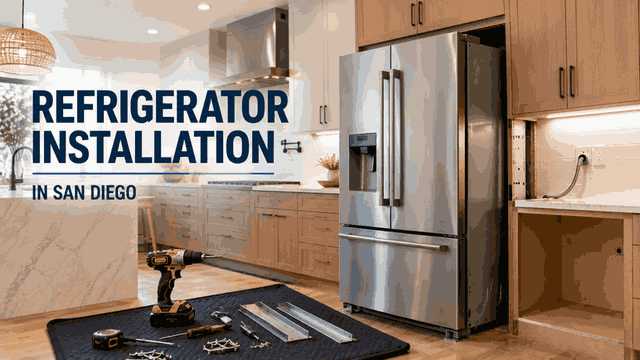
Refrigerator Installation in San Diego
A new refrigerator should fit the kitchen correctly, operate safely, and maintain stable temperatures. Proper installation includes accurate measurements, safe positioning, sufficient ventilation, correct electrical and water connections, door alignment, leveling, and final testing.
Reset Appliance Repair provides professional refrigerator installation in San Diego for freestanding, counter-depth, built-in, panel-ready, and column models. We also install refrigerators with integrated freezers, ice makers, water dispensers, convertible drawers, custom panels, and separate cooling zones.
What Is Included in Refrigerator Installation?
Professional refrigerator installation may include inspecting the installation area, measuring the cabinet opening, preparing the delivery path, positioning and leveling the appliance, connecting the water supply, checking the electrical outlet, aligning the doors, securing anti-tip hardware, and testing the cooling system.
Installation requirements vary by refrigerator design and model. Before final positioning, the manufacturer’s instructions should be reviewed for required clearances, ventilation, water pressure, electrical supply, panel limits, and startup procedures.
Refrigerator Types and Installation Requirements
Top-Freezer and Bottom-Freezer Refrigerators
Top-freezer refrigerators need enough space for the upper door to open without hitting nearby cabinets. Bottom-freezer models require room for the freezer drawer to extend fully without contacting an island, wall, or cabinet handle.
French-Door and Side-by-Side Refrigerators
French-door refrigerators must be leveled carefully so the upper doors align and the center flap closes correctly. Side-by-side refrigerators need manufacturer-specified side clearances and sufficient room for both doors to open without hitting surrounding surfaces.
Counter-Depth Refrigerators
Counter-depth refrigerators sit closer to the cabinet line, but the doors may still need to extend beyond the cabinets for proper hinge movement. Some models have reversible doors. When the manufacturer permits it, the hinge position can be changed to improve access and prevent the door from opening into a wall.
Built-In, Panel-Ready, and Column Refrigerators
Built-in, panel-ready, and column refrigerators require precise measurements. Decorative panels must follow the manufacturer’s limits for size, thickness, and weight. An oversized or heavy panel can strain the hinges, affect alignment, or prevent the door from sealing correctly.
Tall built-in units and separate refrigerator and freezer columns may also require approved anchors or anti-tip brackets.
Measuring the Space and Preparing the Delivery Path
The refrigerator opening should be measured at several points because floors, walls, and cabinets may not be perfectly straight. Important measurements include width, height, depth, trim, handles, door clearance, freezer drawer extension, and ventilation space.
The delivery path also needs inspection. Narrow entrances, stairs, tight corners, flooring transitions, and kitchen islands can make appliance movement difficult. Doors, drawers, or handles may need temporary removal and careful realignment after the refrigerator is placed.
In San Diego homes, installation areas may include compact condo kitchens, custom cabinetry, narrow entryways, limited shutoff-valve access, or counter-depth openings. Checking these conditions before final placement helps reduce the risk of damage to the refrigerator, floor, walls, and cabinets.
Does Refrigerator Installation Include the Water Line and Ice Maker?
Water-Line Connection
A refrigerator with a built-in ice maker or water dispenser requires a secure water connection. Installation may include checking the shutoff valve, supply tubing, connector size, water pressure requirements, filter position, and water-line routing.
The valve should remain accessible after installation. The tubing must not be kinked, stretched, pinched, or crushed behind the refrigerator.
After connection, the fittings are checked for leaks. The water system is flushed when required, the filter is seated correctly, and the ice maker is activated.
Ice Maker Setup
Ice makers may be located inside the freezer, in the refrigerator door, or within the fresh-food compartment. Each design uses a different water path and temperature zone. Ice production normally begins only after the refrigerator reaches the required operating temperature. The first batches may need to be discarded according to the manufacturer’s instructions.
Freezer Compartment and Convertible Zone Setup
Freezer Compartment Setup
The freezer may be located at the top, bottom, side, or inside a convertible drawer. Installation includes checking the drawer rails, baskets, gaskets, controls, and space required for full extension.
An uneven refrigerator may cause a freezer drawer to move on its own or fail to seal. Poor gasket contact can contribute to frost, moisture, or unstable temperatures.
Convertible Zone Setup
Convertible compartments may operate as a refrigerator, freezer, beverage zone, or temperature-controlled drawer. These areas should be set for the homeowner’s intended use. Food containers and internal bins must not block the air vents.
Why Are Leveling and Ventilation Important?
Correct Leveling
Correct leveling helps doors close properly, improves gasket contact, and prevents drawers from rolling open. Depending on the model, adjustment may involve leveling legs, rear rollers, built-in supports, or adjustable hinges.
Refrigerator Ventilation
Refrigerator ventilation must remain unobstructed. Heat may escape through the rear, lower grille, side walls, or upper cabinet vent. Blocked airflow can increase operating time and reduce cooling efficiency.
Final Inspection
During final testing, we inspect door height, gasket contact, center flaps, freezer drawer movement, water fittings, ice maker operation, anti-tip hardware, lights, controls, and unusual vibration.
If the refrigerator was transported on its side or at a steep angle, it may need to remain upright before being connected to power. The required waiting period depends on the model and manufacturer.
How Long Does a Refrigerator Need to Cool After Installation?
A newly installed refrigerator does not reach stable temperatures immediately. The refrigerator and freezer compartments need time to cool before they are fully loaded with food.
The exact cooling period varies by model, room temperature, settings, and manufacturer instructions. The water dispenser may also require additional flushing before normal use.
Professional Refrigerator Installation in San Diego
Professional installation helps protect the refrigerator, flooring, cabinetry, electrical connection, and plumbing. Reset Appliance Repair installs residential refrigerators in San Diego and checks the appliance before completing the service.
Our installation process may include positioning, leveling, water-line connection, ice maker setup, door alignment, ventilation checks, anti-tip hardware, and final operational testing.
Call Reset Appliance Repair at +1 619-743-9389 for professional refrigerator installation in San Diego.
Contact Information
Reset Appliance Repair – San Diego, CA
Address: 11031 Via Brescia, San Diego, CA 92129
Email: resetappliance@gmail.com
Phone: +1 619-743-9389
Open Hours: Monday – Sunday, 7:00 AM – 10:00 PM
