
 +1 619-743-9389
CONTACT US
- +1 619-743-9389
- 11031 Via Brescia, San Diego, CA 92129
- resetappliance@gmail.com
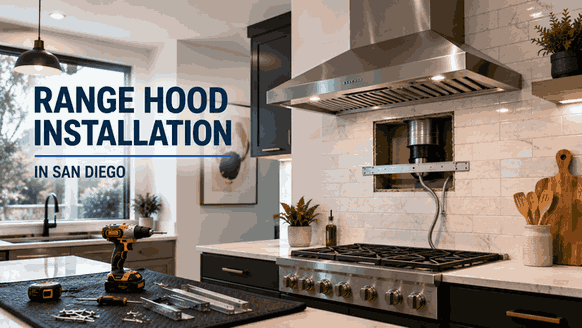
Range Hood Installation in San Diego
A range hood must fit the cooking area, remain securely mounted, and move cooking air effectively. Proper installation requires correct dimensions, suitable electrical access, adequate ventilation, safe clearance above the cooktop, and a clear path for the exhaust duct when the hood vents outdoors.
Reset Appliance Repair provides professional range hood installation in San Diego for under-cabinet, wall-mounted, island, chimney-style, insert, and convertible models. We install residential ventilation systems above gas, electric, and induction cooking surfaces.
What Is Included in Range Hood Installation?
Professional installation may include inspecting the cooking area, measuring the mounting location, confirming cabinet or wall support, preparing the electrical connection, assembling the hood, attaching the ductwork, securing the appliance, and testing the fan, lights, and controls.
The installation method depends on the hood design and kitchen layout. Manufacturer instructions should be reviewed for mounting height, cabinet dimensions, electrical requirements, duct size, airflow direction, support points, and required clearances from the cooking surface.
Range Hood Types and Their Installation Requirements
Under-Cabinet Range Hoods
Under-cabinet range hoods attach beneath an existing wall cabinet. The cabinet must provide enough support and space for electrical wiring and duct routing. Depending on the model, the exhaust may exit through the top or rear of the hood.
Wall-Mounted Chimney Hoods
Wall-mounted chimney hoods install directly against the wall and commonly use a decorative chimney cover to conceal the duct. The mounting area must be level and strong enough to support the appliance.
Island Range Hoods
Island range hoods suspend from the ceiling above an island cooktop. They require secure overhead framing, accurate alignment with the cooking surface, and enough ceiling space for the duct and electrical connection.
Range Hood Inserts
Range hood inserts fit inside custom wood or metal enclosures. The liner, blower, and surrounding cabinet must be compatible with the manufacturer’s dimensions and heat-clearance requirements.
Convertible Hoods
Convertible hoods may operate in ducted or recirculating mode. The selected configuration should match the kitchen design and the manufacturer’s approved installation options.
How High Should a Range Hood Be Installed?
The correct mounting height depends on the hood, cooktop type, ceiling height, and manufacturer’s instructions. A hood installed too low may interfere with cooking and receive excessive heat. A unit mounted too high may capture smoke, steam, and grease less effectively.
The hood should be centered over the cooking surface. Its width should also be appropriate for the range or cooktop beneath it.
Nearby cabinets, crown molding, shelves, and backsplashes must not block the hood body, chimney cover, filters, or controls. Measurements should be confirmed before drilling or modifying cabinetry.
Does a Range Hood Need an Exterior Vent?
Ducted Range Hoods
Ducted range hoods carry cooking air to an approved exterior termination. The duct should follow the manufacturer’s specifications for diameter, material, length, and direction.
A short, direct route generally supports better airflow than a long duct with multiple turns. Crushed sections, undersized ducts, sharp bends, and loose joints can increase noise and reduce exhaust performance.
The duct should not terminate inside an attic, wall cavity, cabinet, or other enclosed area. The exterior cap should open freely and help prevent outside air, debris, and pests from entering the duct.
Recirculating Range Hoods
A recirculating hood does not exhaust air outdoors. Instead, it passes air through grease and charcoal filters before returning it to the kitchen. Filters must be installed correctly and remain accessible for cleaning or replacement.
What Electrical Connection Does a Range Hood Require?
Range hoods require an electrical supply that matches the model specifications. Some units connect through an approved power cord, while others are hardwired through a protected junction box.
The wiring location must not interfere with the blower, filters, chimney cover, or duct. Extension cords and improvised adapters should not be used.
Models with powerful blowers, remote fan assemblies, heat lamps, or advanced controls may have additional electrical requirements. Existing wiring should be checked before the hood is mounted permanently.
Cabinet, Wall, and Ceiling Support
A range hood must be fastened to solid structural support rather than decorative panels alone. Wall studs, cabinet framing, ceiling joists, mounting plates, or manufacturer-approved anchors may be required.
Island hoods need especially careful support because the entire appliance hangs from the ceiling. The mounting frame should remain square so the hood does not tilt or shift.
In San Diego homes, range hood installation may involve remodeled kitchens, custom cabinets, vaulted ceilings, compact condominiums, or replacement hoods with different dimensions. Inspecting the structure and duct route before installation helps prevent visible gaps, unstable mounting, and unnecessary cabinet modifications.
Why Are Airflow and Makeup Air Important?
A range hood must have enough airflow for the cooking surface and kitchen layout. However, installing the most powerful blower is not always the best solution. Excessive airflow can increase noise and may affect pressure inside a tightly sealed home.
Some high-capacity ventilation systems may require a makeup-air solution under applicable building requirements. The correct approach depends on blower capacity, home construction, and existing ventilation.
Grease filters, blower inlets, dampers, and exhaust openings must remain unobstructed. Duct tape, loose insulation, or cabinet materials should not block moving parts or airflow paths.
Final Testing After Range Hood Installation
After mounting, we inspect the hood position, fasteners, duct joints, electrical connection, filters, clearances, chimney cover, and surrounding cabinetry.
A functional test confirms that each fan speed operates, the lights respond, controls work properly, and exhaust air moves through the intended path. Unusual vibration, rattling, air leakage, and excessive noise should be addressed before the installation is completed.
The homeowner should also be able to remove the grease filters and access any replaceable charcoal filters without disturbing the hood.
Professional Range Hood Installation in San Diego
Professional installation helps protect the range hood, cabinetry, walls, ceiling, electrical connection, and ventilation system. Reset Appliance Repair installs under-cabinet, wall-mounted, island, chimney-style, insert, ducted, and recirculating range hoods for residential properties in San Diego.
Call Reset Appliance Repair at +1 619-743-9389 for professional range hood installation in San Diego.
Contact Information
Reset Appliance Repair – San Diego, CA
Address: 11031 Via Brescia, San Diego, CA 92129
Email: resetappliance@gmail.com
Phone: +1 619-743-9389
Open Hours: Monday – Sunday, 7:00 AM – 10:00 PM
