

 +1 619-743-9389
CONTACT US
- +1 619-743-9389
- 11031 Via Brescia, San Diego, CA 92129
- resetappliance@gmail.com
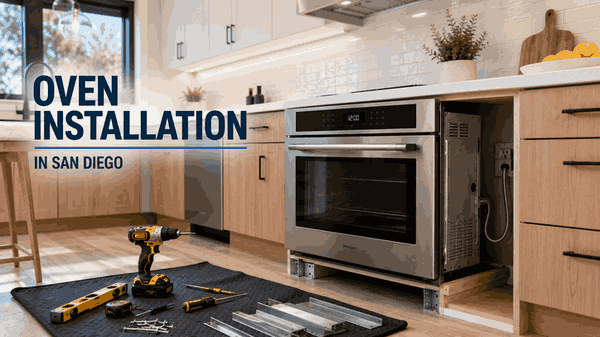
Oven Installation in San Diego
An oven must fit the cabinet opening, connect to the correct power or gas supply, remain securely supported, and heat properly. Safe installation also requires ventilation, door clearance, stable mounting, and final testing.
Reset Appliance Repair provides professional oven installation in San Diego for electric, gas, single, double, wall-mounted, built-in, steam, speed, and microwave-oven combination models.
What Is Included in Professional Oven Installation?
Professional installation may include inspecting the cabinet opening, confirming the dimensions, preparing the delivery path, positioning the appliance, connecting the approved power or gas supply, securing the oven to the cabinetry, and testing its heating functions.
The exact process depends on the design. Manufacturer instructions should be checked for cabinet dimensions, support requirements, electrical ratings, gas specifications, ventilation, trim clearances, mounting points, and door-opening space.
Oven Types and Their Installation Requirements
Single and Double Wall Ovens
Single wall ovens need a cabinet opening that matches the specified width, height, and depth. Double ovens are heavier and require a strong, level support platform that can carry the appliance without sagging.
Built-In Microwave and Oven Combinations
Built-in microwave and oven combinations need exact spacing between components.
Steam and Speed Ovens
Steam ovens may use a water reservoir, drain arrangement, or additional ventilation depending on the model. Speed ovens combine microwave and convection functions and may have different electrical requirements from standard wall ovens.
Gas and Electric Ovens
Gas ovens require an approved gas connection and accessible shutoff valve. Electric ovens usually connect to a dedicated circuit through a junction box rather than a standard household outlet.
Measuring the Cabinet Opening and Delivery Path
The opening should be measured at several points because cabinet panels may not be perfectly square. Important dimensions include width, height, depth, trim overlap, ventilation space, and clearance for the oven door.
The support base must be level and strong enough for the appliance. Mounting rails, cabinet screws, or approved brackets may be needed to keep the oven stable.
In San Diego homes, installation may involve custom cabinetry, older kitchen openings, compact condominiums, or remodeled spaces where the new oven differs from the previous model. Checking the opening in advance helps prevent gaps, pressure on trim, blocked vents, and inadequate support.
Narrow doorways, stairs, islands, and tight corners may also require temporary door removal or careful repositioning during delivery.
What Electrical Connection Does an Oven Need?
Most electric wall ovens require a dedicated circuit that matches the voltage, amperage, and wire configuration listed by the manufacturer. The junction box must remain accessible and should not interfere with the oven body.
Connections must be secure, and the cable should not be pinched against metal edges or hot surfaces. Extension cords and improvised adapters should not be used.
Combination ovens, steam ovens, and large double ovens may require more electrical capacity than a standard single oven. The existing circuit should be verified before installation.
How Is a Gas Oven Connected Safely?
A gas oven needs an approved supply line, compatible fittings, and an accessible shutoff valve. The connection should follow the appliance instructions and applicable local requirements.
The fittings must be checked for leaks before operation. The gas line should not be twisted, stretched, or trapped behind the appliance.
Fuel type also matters. An oven designed for natural gas should not be connected to propane unless the manufacturer provides an approved conversion method.
Why Do Ventilation, Clearance, and Secure Mounting Matter?
Ventilation
Built-in ovens release heat through vents around the door, control panel, or cabinet trim. These openings must remain unobstructed.
Secure Mounting
The oven must be secured to the cabinet. Loose mounting may allow movement when the door is opened or heavy cookware is placed on the racks.
Door Clearance
The door should open fully without hitting handles, walls, or cabinet fronts.
Final Testing After Oven Installation
After installation, we inspect the mounting points, electrical or gas connection, door alignment, trim fit, ventilation, controls, lights, racks, and surrounding clearance.
A test cycle confirms that the oven powers on, heats, and responds to temperature settings. Convection fans, broil elements, steam functions, timers, and smart controls are checked when included.
A new oven may produce a temporary odor during its first heating cycle. The room should be ventilated, and the manufacturer’s initial-use instructions should be followed before cooking.
Professional Oven Installation in San Diego
Professional installation helps protect the oven, cabinetry, electrical system, gas connection, flooring, and surrounding surfaces. Reset Appliance Repair installs single, double, gas, electric, wall-mounted, steam, speed, and combination ovens for residential properties in San Diego.
Call Reset Appliance Repair at +1 619-743-9389 for professional oven installation in San Diego.
Contact Information
Reset Appliance Repair – San Diego, CA
Address: 11031 Via Brescia, San Diego, CA 92129
Email: resetappliance@gmail.com
Phone: +1 619-743-9389
Open Hours: Monday – Sunday, 7:00 AM – 10:00 PM
