
 +1 619-743-9389
CONTACT US
- +1 619-743-9389
- 11031 Via Brescia, San Diego, CA 92129
- resetappliance@gmail.com
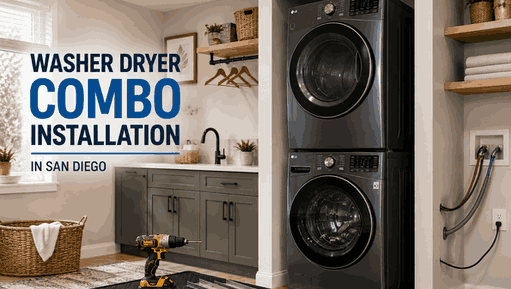
Washer Dryer Combo Installation in San Diego
A washer dryer combo combines washing and drying in one appliance. Proper installation requires secure water and drain connections, the correct electrical supply, stable leveling, enough cabinet clearance, and suitable airflow for the drying system.
Reset Appliance Repair provides professional washer dryer combo installation in San Diego for ventless, condenser, heat pump, and vented all-in-one models. We install residential combo units in laundry rooms, closets, condominiums, kitchens, garages, and compact utility spaces.
What Is Included in Washer Dryer Combo Installation?
Professional installation may include inspecting the laundry area, measuring the available space, removing shipping materials, positioning and leveling the appliance, connecting the water supply, securing the drain hose, checking the electrical outlet, and testing both wash and dry functions.
The exact process depends on the model. Manufacturer instructions should be reviewed for water pressure, drain height, electrical requirements, cabinet clearances, ventilation, door movement, and startup procedures.
A washer dryer combo is one appliance with one drum. It should not be confused with a stacked washer and dryer, which consists of two separate machines, or a laundry center with separate washing and drying sections.
Washer Dryer Combo Types and Their Installation Requirements
Ventless Condenser Models
Ventless condenser models remove moisture from clothing without an exterior exhaust duct. Moisture is condensed into water and discharged through the drain system or collected according to the appliance design.
Heat Pump Washer Dryer Combos
Heat pump washer dryer combos also operate without a traditional dryer vent. They reuse warm air during drying and may require extra space around ventilation openings, filters, or service panels.
Vented Combo Units
Vented combo units use an exhaust duct and must connect to an approved exterior termination. The duct size, material, length, and routing should follow the manufacturer’s instructions.
Compact and Full-Size Combo Units
Compact combo units are useful where space is limited, but reduced cabinet dimensions can make hose routing and service access more difficult. Full-size models may require more depth for the door, water lines, drain hose, and rear connections.
Measuring the Space and Preparing the Delivery Path
The installation area should be measured for width, height, depth, rear clearance, door movement, and access to the outlet, shutoff valves, and drain.
A combo unit may fit inside the opening while still lacking room for the door to open fully. Nearby walls, cabinet handles, countertops, or closet doors should not block loading and unloading.
In San Diego homes, washer dryer combos may be installed in compact condominiums, accessory dwelling units, laundry closets, kitchens, garages, or converted utility spaces. Inspecting the floor, ventilation, plumbing, drainage, and cabinetry before final placement helps prevent connection and clearance problems.
The delivery path may include narrow hallways, stairs, thresholds, tight corners, or small door openings. Careful preparation helps protect the appliance, flooring, walls, and nearby cabinets.
How Are the Water Supply and Drain Connected?
Water Supply Connection
Most washer dryer combos connect to hot and cold water shutoff valves. Some compact models may use different inlet arrangements, so the appliance instructions should be checked before installation.
Supply hoses must match the valve and appliance fittings. They should remain free of kinks, sharp bends, stretching, and contact with surfaces that could cause wear.
Drain Connection
The drain hose may connect to a standpipe, laundry sink, or approved drain fitting. It must be secured so it cannot slip out during draining. The hose should not be inserted farther than the manufacturer allows because restricted airflow can interfere with drainage.
Incorrect drain height or routing may cause siphoning, slow drainage, standing water, or error messages. After connection, the fittings and drain path should be checked for leaks.
What Electrical Connection Does a Combo Unit Need?
Electrical requirements vary by design. Some ventless washer dryer combos operate from a standard grounded household outlet, while other models require a dedicated higher-capacity circuit.
Vented, high-capacity, and certain heat pump models may have different voltage or amperage requirements. The outlet and circuit should match the appliance rating before the unit is positioned permanently.
Extension cords, loose adapters, and damaged receptacles should not be used. The power cord must remain accessible and should not be crushed behind the appliance.
Why Must Shipping Bolts Be Removed?
Front-loading combo units are often transported with shipping bolts that hold the drum in place. These bolts must be removed before the appliance is operated.
Running the unit with shipping bolts installed can cause severe vibration, movement, noise, and possible damage to the suspension system.
The removed bolts and spacers should be stored in case the appliance needs to be transported again.
Leveling, Ventilation, and Cabinet Clearance
Leveling
A washer dryer combo must sit firmly on a stable floor. Adjustable feet are used to level the cabinet and prevent rocking.
An uneven appliance may vibrate during spinning, shift from its position, become noisy, or fail to drain correctly. Anti-vibration pads may help in some locations, but they should not replace proper leveling.
Ventilation
Ventless does not mean that the appliance needs no airflow. Cooling grilles, fan openings, filters, condenser areas, and service panels must remain unobstructed.
Cabinet Clearance
Closet installations may require ventilation openings or louvered doors. Built-in or under-counter placement should only be used when approved by the manufacturer.
Final Wash and Dry Testing
A complete test should confirm that the appliance fills, tumbles, drains, spins, and begins drying correctly. Both the washing and drying systems need to be checked because one successful wash cycle does not confirm proper drying operation.
We inspect the water connections, drain hose, leveling feet, door gasket, controls, filters, ventilation openings, and surrounding clearances.
The first full wash-and-dry program may take longer than separate washer and dryer cycles. Drying time can vary based on load size, fabric type, selected program, spin speed, and moisture level.
Lint filters, drain filters, detergent dispensers, and condenser areas should remain accessible for regular maintenance.
Professional Washer Dryer Combo Installation in San Diego
Professional installation helps protect the combo unit, flooring, plumbing, drainage system, electrical connection, and surrounding cabinetry. Reset Appliance Repair installs ventless, condenser, heat pump, compact, full-size, and vented washer dryer combo units for residential properties in San Diego.
Call Reset Appliance Repair at +1 619-743-9389 for professional washer dryer combo installation in San Diego.
Contact Information
Reset Appliance Repair – San Diego, CA
Address: 11031 Via Brescia, San Diego, CA 92129
Email: resetappliance@gmail.com
Phone: +1 619-743-9389
Open Hours: Monday – Sunday, 7:00 AM – 10:00 PM
